What is Xanthium?
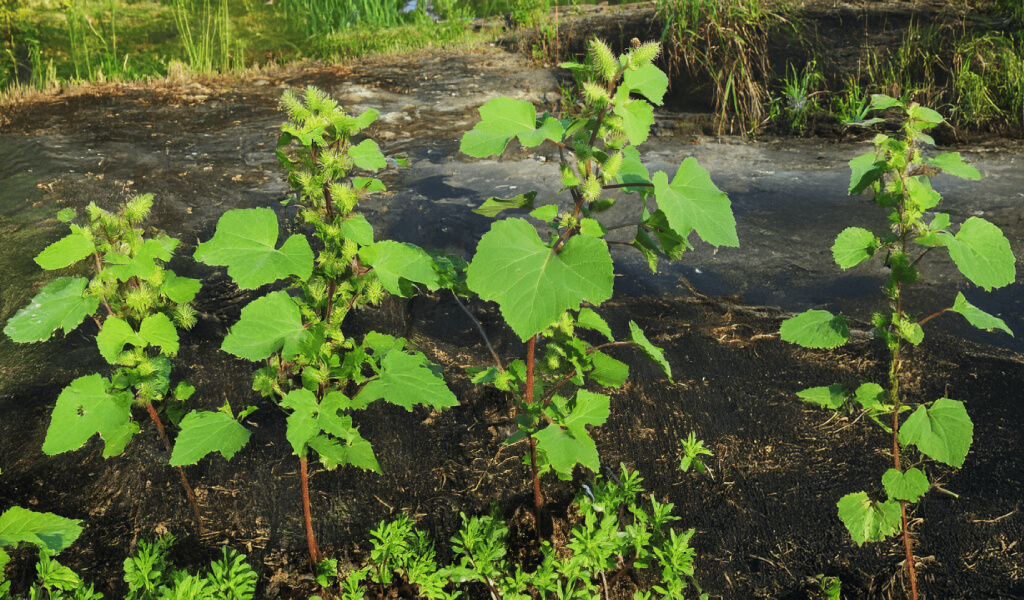
Xanthium is a genus of flowering plants in the daisy/sunflower family (Asteraceae). The species most commonly referred to in traditional medicine is Xanthium strumarium (often called “cocklebur”), though other species like Xanthium spinosum also have similar uses.
Xanthium grows widely in Asia, Europe, the Americas and many tropical or subtropical regions; in India, such weeds can often be found near fields or wastelands. Different parts of the plant – leaves, roots, fruit (the burs), seeds – have been used in traditional medicine and folk remedies.
Traditional & Ethnomedicinal Uses
Across traditional systems – including folk/ayurvedic practices, herbal medicine – Xanthium has been used for a variety of ailments. Some of the traditional uses include:
- Relief from sinusitis, nasal congestion, rhinitis, and sinus/nasal disorders.
- Treating headaches, colds, allergies, and related conditions.
- As a remedy for rheumatism, arthritis, joint pains.
- For skin problems, insect bites, skin conditions (like urticaria), and sometimes skin disorders (though extreme caution is historically advised).
- As a digestive aid, for gastrointestinal complaints – including as a laxative, for stomach issues, ulcers, and sometimes as a tonic or general health-promoting herb.
- Traditional uses also mention antipyretic (fever-reducing), diuretic, detoxifying or “cleansing” effects, as well as use for broader ailments like malaria, epilepsy (in some folk contexts), though such uses are less common or less documented in modern research.
Because of these traditional applications, Xanthium has had importance in herbal pharmacopeias, folk systems, and local medicinal uses across many cultures.
What Research and Modern Science Says: Phytochemistry & Pharmacology
Modern scientific studies have identified many bioactive compounds in Xanthium — and explored their pharmacological effects. Key insights:
🌿 Bioactive Constituents
- Researchers have isolated more than 170 chemical constituents from Xanthium strumarium: including sesquiterpenoids, phenylpropenoids, flavonoids, glycosides, coumarins, steroids, and other phenolic and alkaloid-type compounds.
- Of particular note are a group of compounds called Xanthanolides — bicyclic sesquiterpene-lactones that are characteristic of the genus Xanthium. These have drawn attention for a variety of potential medicinal activities.
- One well-studied xanthanolide is Xanthatin, known for anti-inflammatory, anti-tumour, antimicrobial, and other bioactive properties.
⚕️ Pharmacological Properties & Potential Benefits
Research (in vitro, in vivo, animal studies) has shown a broad range of biological activities for Xanthium extracts or its bioactive components. Key potential benefits include:
- Anti-inflammatory & analgesic effects — Xanthium extracts (especially polar fractions) have shown reduction in inflammation and suppression of pain in experimental models.
- Anti-allergic and sinus / nasal support — Historically used for rhinitis and sinusitis; recent reviews confirm that certain bioactive compounds may help modulate immune and inflammatory pathways relevant to allergies and sinus conditions.
- Antioxidant activity — Phenolic compounds and flavonoids from Xanthium have shown ability to scavenge free radicals, which could help mitigate oxidative stress, support skin health, wound healing, and general cellular protection.
- Antimicrobial & Antifungal — Extracts have demonstrated antibacterial and antifungal actions in lab studies, supporting its traditional use for infections, skin issues, or external application.
- Antitumor / Anticancer potential — Some components, especially xanthanolides like Xanthatin, have exhibited cytotoxicity against various cancer cell lines and inhibited tumor growth in experimental studies.
- Diuretic effects — Studies in animal models have found that fruit extracts of Xanthium strumarium can have diuretic activity.
- Anti-ulcer / Gastrointestinal support — Traditional use for ulcers and digestive complaints has some backing from studies showing gastro-protective effects, although evidence is still limited.
In more recent work (2025), a review of pharmacological effects of Xanthium highlighted that its bioactive compounds may offer anti-allergic rhinitis, analgesic, anti-inflammatory, antimicrobial, antitumor, antioxidant, antiviral, and metabolic benefits, among others — though with a caution that further research is needed for safety, dosage, and standardization.
What We Don’t Yet Know – Risks, Toxicity & the Need for Caution
Because Xanthium contains a complex mix of bioactive (and sometimes toxic) compounds, there are important cautions and limitations:
- Some species/parts of Xanthium (especially seeds and seedlings) contain toxic compounds like Carboxyatractyloside – which can be harmful or even lethal when ingested in large amounts. There have been documented cases of poisoning and fatalities, especially when seeds or unprocessed plant parts were consumed.
- Because of this, the medicinal use of Xanthium traditionally typically involves processing (e.g. drying, specific preparation methods) to reduce toxicity — for example, stir-baking or processing the fruit before use.
- Most of the evidence for beneficial effects comes from laboratory (in vitro) or animal studies. While promising, these results cannot be considered definitive proof for treatment in humans. Clinical studies are limited.
- The effects of dosage, long-term use, interactions, and safety (especially for vulnerable populations — children, pregnant women, people with liver/kidney issues) remain under-studied.
- Therefore, any formulation or supplement using Xanthium must approach with care, standardization, and rigorous quality control, particularly to avoid toxicity.
Why Xanthium Could Align with the Nutrisukan Ethos – And What to Consider
Given that your brand (Nutrisukan) emphasizes herbal/natural products and nutraceuticals, Xanthium offers both promise and caution – but with careful formulation and ethical positioning, it could be a valuable inclusion.
What works in Xanthium’s favor:
- Broad traditional use across cultures, giving consumer familiarity and trust.
- A diverse profile of pharmacologically active compounds (sesquiterpene lactones, flavonoids, phenolics, glycosides) — offering potential benefits ranging from anti-inflammatory, antioxidant, antimicrobial to metabolic and general wellness.
- Promising modern research supporting several effects (anti-inflammatory, antioxidant, antimicrobial, anticancer, diuretic), which resonates with rising demand for natural wellness & preventive products.
- If standardized and processed correctly (to remove or mitigate toxins), Xanthium-based products can bridge traditional herbal wisdom and modern scientific evidence – a niche many health-conscious consumers appreciate.
What to be careful about / Consider seriously:
- Toxicity risks with certain parts (seeds/seedlings) – need rigorous sourcing, processing, and quality checks.
- Limited human clinical data – so claims must be moderate, transparent, and responsibly worded. Avoid overpromising.
- Dosage, form (extract vs whole plant), and method of preparation will significantly affect safety and efficacy.
- Need for regulatory compliance, adherence to quality standards, and consumer education (benefits vs risks).
Suggested Ways Nutrisukan Could Use Xanthium
Here are a few ideas for integrating Xanthium into your product & content strategy:
- Develop a standardized herbal supplement or extract (capsule, powder, tincture) – focusing on safe and processed forms (e.g. using fruit/leaf extracts, not raw seeds).
- Use Xanthium in topical products or skin-care (given its antioxidant, anti-inflammatory, wound-healing potential) – for example, creams, ointments, or balms targeting skin conditions, minor wounds, or inflammation.
- Create content (blog / social media) educating consumers about traditional uses + modern evidence + safety considerations — transparency builds trust.
- Collaborate with herbal-medicine researchers or pharmacognosy experts to conduct or support local studies – given variable toxicity and need for safe standardization, localized research could add value.
Consider multi-herb formulations where Xanthium is combined with other botanicals (where synergy and safety are better understood) – though always with careful formulation and testing.